

Our Gardens
Cultivating our natural landscape
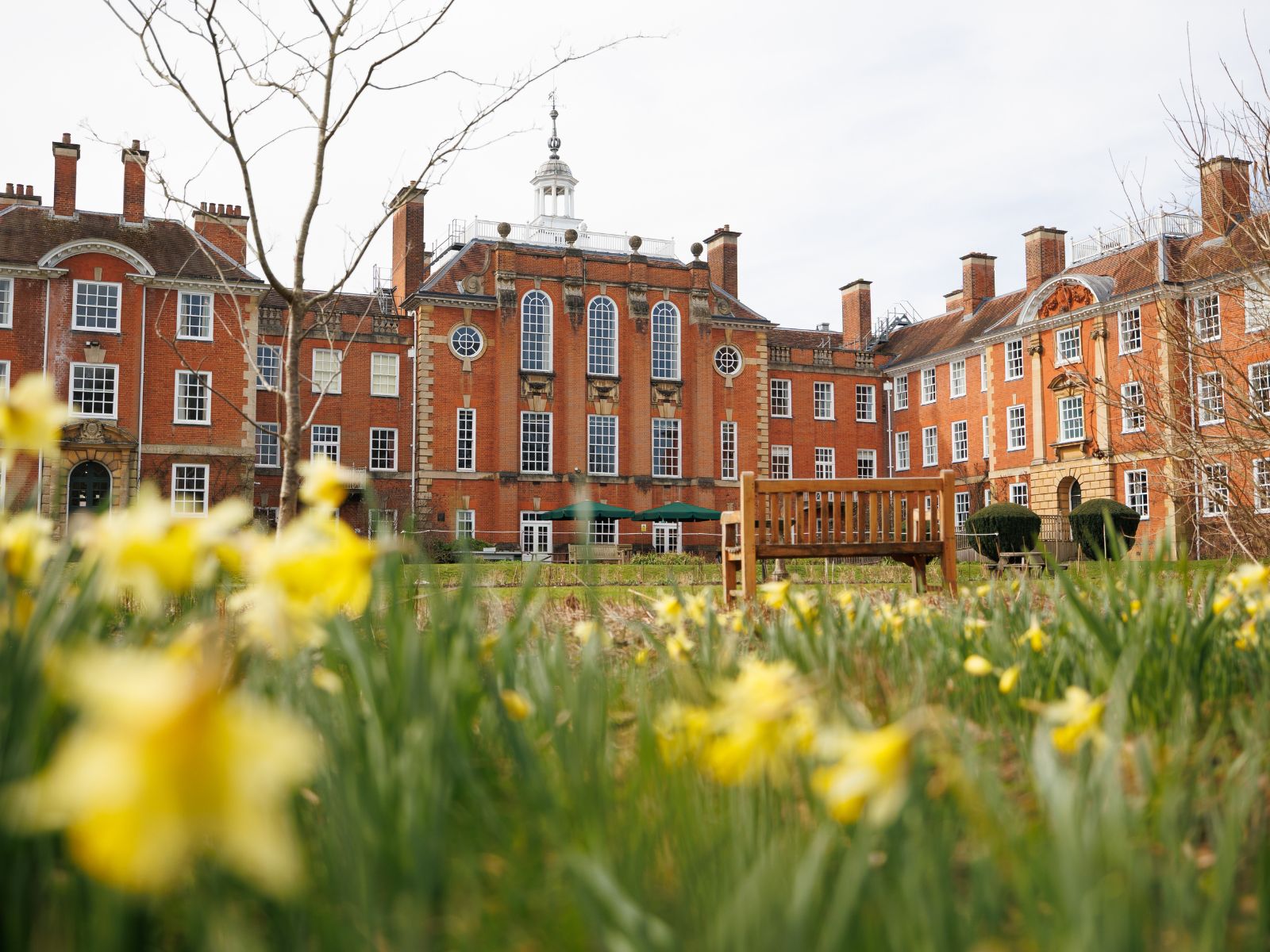
Discover more about our 13 acres of gardens, which is made up of riverbank, biodiverse meadows and formal planted borders.

Set alongside the river Cherwell, LMH's gardens provide a peaceful and relaxed space for College members to wind down, play sports, work and socialise. From more formal, planted areas to wilder meadow spaces, there are many hidden corners to explore.
For students who want to get their hands dirty, our Deputy Head Gardener Kevin (along with his trusty sidekick, Dude the dog) runs a weekly Gardening Club during termtime, and other members of the gardening team regularly run workshops for students who want to get involved and explore nature. Our 'Mindfulness Bench' regularly moves around the garden, inviting College members to take a moment to pause and reflect.
With ample outdoor space, everyone at LMH is invited and encouraged to make the most of the gardens and all they can offer.
Gardens have always played an important part in life at LMH. In 1999 LMH published a history of the gardens, written by alumna Eileen Starmers-Smith (Fairey, 1948, English) during the 1970s. Originally published in the Brown Book, the 1999 publication was produced in her memory.
Jenny Rose Carey Head Gardener, Oakley Loudon (centre), and College Gardeners Ngaio and Kevin (right) nurture our amazing and extensive gardens, come rain or shine. In addition to keeping on top of regular maintenance and upkeep of the gardens, the team have launched several initiatives to encourage College members to engage with our outdoor places. This includes projects such as the Gardening Club, immersive sound baths, and bulb planting workshops, all aimed at fostering a deeper connection between our people and the nature that surrounds us.

Nestled at the end of Norham Gardens, LMH’s grounds have long formed a central part of the College’s identity, offering solace and inspiration to students and alumni alike. The significance of our gardens cannot be overstated. For many, they are the very heart of the place, shaping fond memories and influencing decisions to choose LMH over other colleges in central Oxford. As we prepare to mark a significant milestone in our history in 2028-2029, there is a collective vision to enhance and redefine the role of the gardens for generations to come.
At the centre of this vision lies a commitment to preserving the historical and botanical richness of the gardens, while also championing vital sustainability and biodiversity goals. The aim is to transform the gardens into a vibrant, immersive space that reflects our academic excellence and pioneering spirit.
Under the guidance of Jenny Rose Carey Head Gardener, Oakley Loudon, plans have been set in motion. Drawing upon the expertise of landscape architects Colvin and Moggridge, as well as acclaimed plant hunter and nurseryman Paul Barney, of Edulis Nurseries, the Garden team is embarking on an ambitious journey.
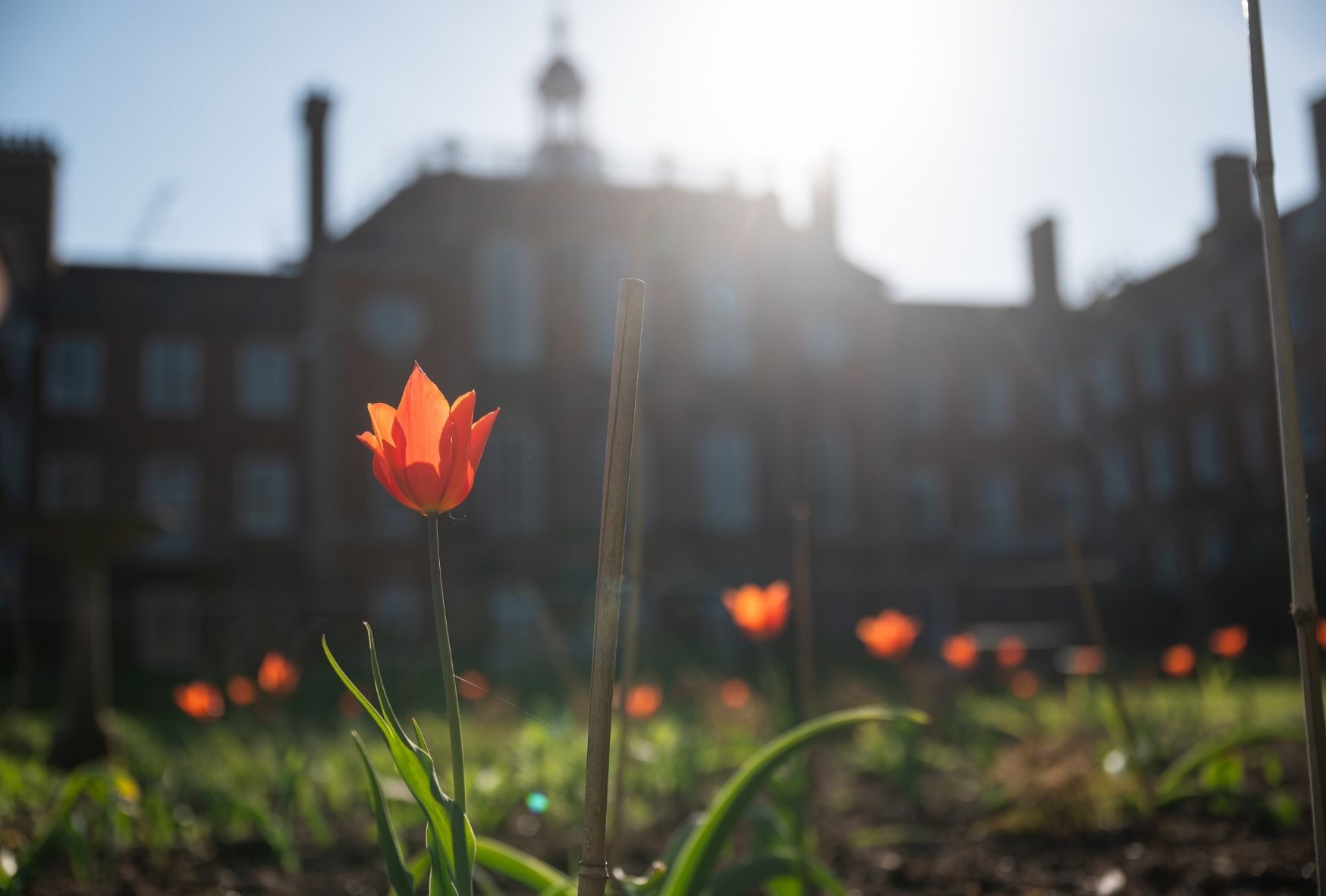
One of the key objectives is to realign the planting to complement the College’s architecture, ensuring year- round interest and visual harmony, highlighting our unique character. The team has already cleared overgrown borders in Wolfson Quad and around the Bar, and have worked to sharpen existing features such as topiaries and landscaped lawns. The goal is to ensure that our garden is considered among the very best of Oxford colleges.
In Oakley’s words, “Our goal is to create a garden that not only reflects LMH’s rich heritage but also inspires and nourishes all who encounter it. We want to build upon the essence that is already here, to steer it in a healthy way toward flourishing as its most expressive and charming character. We want our garden to be a bridge to experience, enjoyment, connection and education. A sense of place, readily available, to merge with the beauty of nature in all its forms, in the ways only a true garden can offer.”


