25th August 2026

Isaac Lethbridge
Isaac Lethbridge (2022, History) explores The Daisy, LMH’s short-lived student magazine of the early 1890s, and what its surviving pages reveal about the College’s earliest generations of women students. From academic debate and student societies to enduring anxieties about exams, The Daisy offers a fascinating glimpse into the community taking shape at LMH in its pioneering early years.
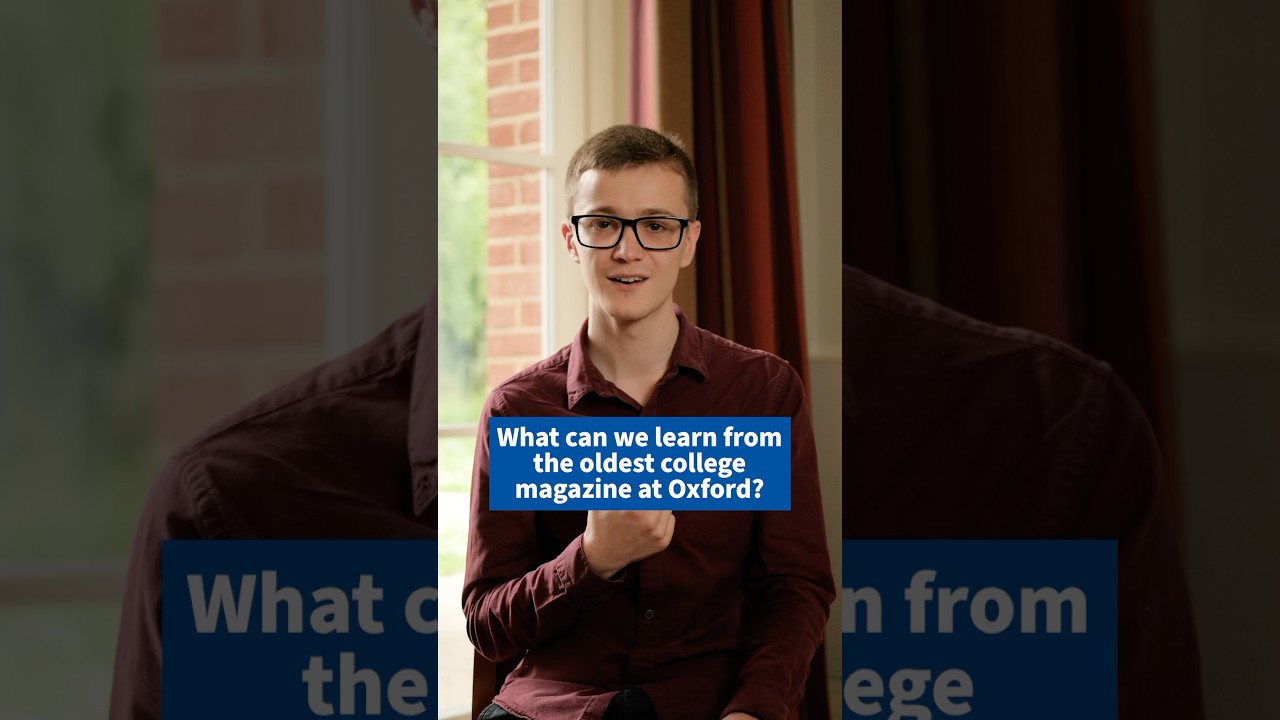
Below, you can read Isaac’s article, originally published in the 2026 edition of LMH News, drawing on material held in the LMH Library’s special collections. You can also watch Isaac discuss The Daisy and its place in the College’s history in the video below.
Writing Themselves into History: How The Daisy Gave Voice to Early LMH Students
What can a short-lived student magazine tell us about the early generations of women at LMH? Isaac Lethbridge (2022, History) explores how The Daisy (1890-1891) enabled students to share ideas, fostered a sense of community between past and present members of the College, and ensured that LMH’s earliest student voices would endure in the historical record.

‘In offering to the public the opening number of “The Daisy,” a new move has been made in the annals of Lady Margaret Hall.’ These words opened the first issue of The Daisy, LMH’s short-lived student magazine from the early 1890s. Some 130 years later, and as we approach the College’s 150th anniversary in 2028, what can we learn by returning to The Daisy? Although only nine issues survive in the Library’s special collections today, the magazine offers a fascinating glimpse into student culture in the students’ own words. When understood in its historical context, the magazine becomes more than simply an early example of student journalism. Rather, The Daisy was one tool through which a community of early women students could assert their academic credentials, as well as their place in the history of their pioneering college at the end of Norham Gardens.
The Daisy frequently reported on social life and opportunities within LMH. It is interesting just how often these events were directly related to academic development and discussion. For example, in 1891 the magazine reported the establishment of a new ‘Literary Society’ with the explicit aim of encouraging students to read beyond their own subject interests. The first meeting of the society featured a talk from ‘M. Macaulay’, almost certainly Mary Frances Macaulay (1888), on ‘The Early Days of Plato’. The write-up in The Daisy commended Macaulay’s deep knowledge of the subject, but worried that she wrongly assumed her audience to already be familiar with the details. Certainly not the first nor last instance of a particularly enthusiastic Oxford student forgetting that not everyone is an expert on their subject – some things really don’t change! It is not only important that these societies were established, but also that the effort was taken to report on their activities. The comments on Macaulay’s speech, for example, show that The Daisy facilitated a back-and-forth between students pursuing their academic interests and their college peers providing feedback. It is clear that these women delighted not only in their own learning, but also in the opportunity to share it with others.
Efforts to foster an academic community extended beyond current students. In The Daisy’s opening issue, the editors were explicit in their hope that the magazine would act as a link between current and former students. In this way, the magazine was not simply a passion project for a specific friend group, but rather envisioned as a way for past students to ‘keep up their connection with the Hall’. Alumnae not only read The Daisy, but were also encouraged to contribute articles and pass on their wisdom to current students. One such contribution was a letter published in 1890, whose anonymous author was ‘proud to sign herself, an old student of LMH’. The letter shared some updates about her life in Eastbourne after graduation and closed by wishing current students good luck with their exam preparations. The author assured readers that the local alumnae community would follow the news of exam results with great interest, and would hope for success for the new ‘victims of the coming Schools’. A common fear of final exams seemed to transcend generations and acted as a point of solidarity between current and former students – yet again, some things never change!

The Daisy unfortunately appears to have ceased publication in 1891, with the final extant issue dating from December of that year. The penultimate issue referenced the financial pressures of publishing a student magazine and warned that missed subscription payments, as well as dwindling enthusiasm for submitting articles, may make it unsustainable. Although the final issue spoke more positively about the magazine’s financial position, it appears that the pressures of publication became too great to manage alongside a demanding academic course.
The budding journalists of LMH were not, however, lost for long. The Fritillary began in 1894 as a student magazine representing all of Oxford’s women’s colleges and was often edited by LMH students throughout its several decades of publication. When read together, these two magazines present a unique source body for reconstructing the changing place of women at Oxford as the nineteenth century gave way to the twentieth. If the editors of The Daisy wished to make a move in the annals of LMH, the fact that we continue to read their words over a century later surely defines that move as a dramatic success.
I too, am proud to sign myself:
Isaac Lethbridge, an old student of LMH


